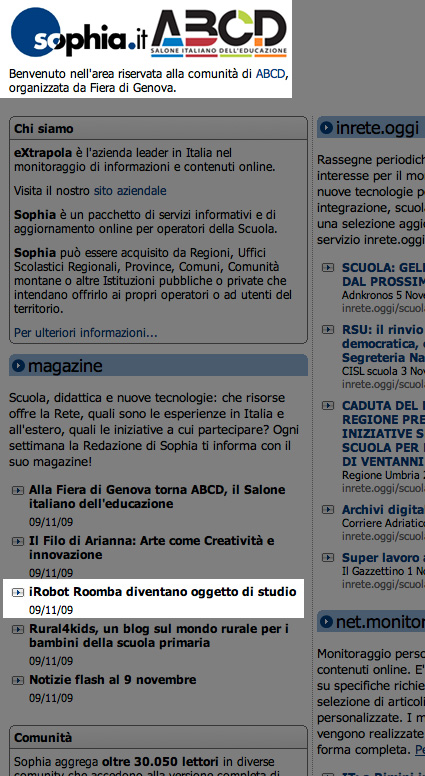
Il noto network Sophia.it è che si occupa di servizi informativi e di aggiornamento online per operatori della Scuola pubblica il comunicato stampa del progetto a cui sto partecipando: “Roomba a scuola”:
Il direttore scolastico dell’I.P.S.I.A. Galilei di Torino, professor Franco Francavilla, dopo circa un anno di sperimentazioni, presso l’istituto inaugurerà il prossimo 18 novembre alle ore 9.30 il primo laboratorio italiano iRobot Roomba.
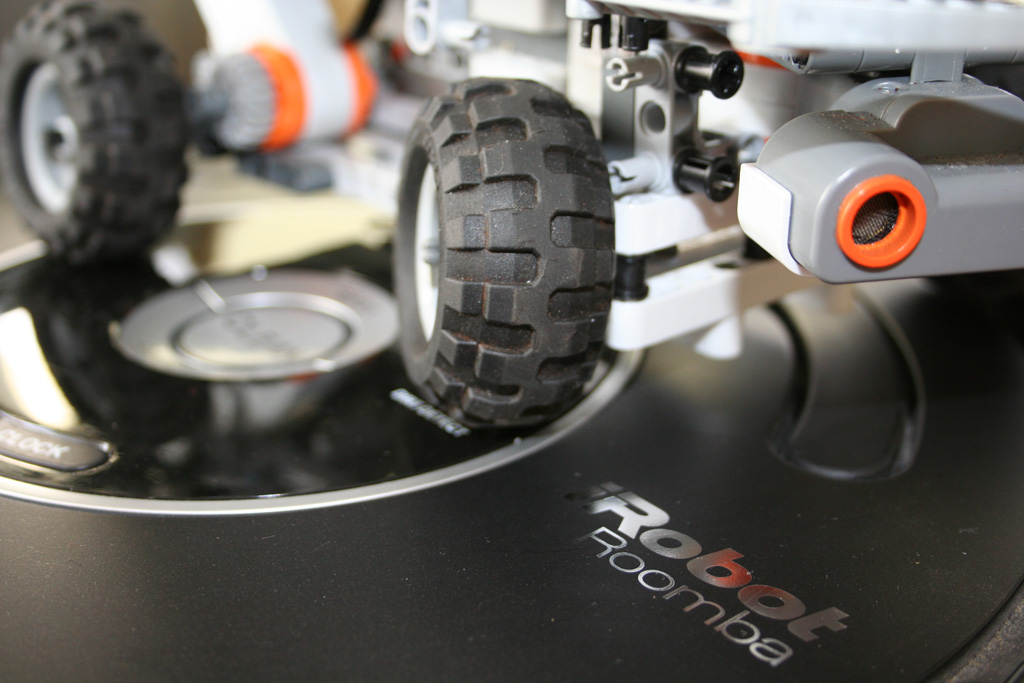
La miniaturizzazione dei componenti e l’alta tecnologia di iRobot hanno fatto di Roomba, oltre che un pregevole amico della casa, anche uno strumento per sperimentare la valenza della robotica come metodologia didattica.Nella giornata inaugurale, gli studenti coinvolti nel progetto presenteranno una serie di esercitazioni di interazione tra Roomba e i prototipi di robot dagli stessi realizzati, nel quadro delle attività di robotica attivate nell’Istituto di via Lavagna. La validità scientifica della sperimentazione in atto è stata validata dal Politecnico di Milano nella persona del prof. Alberto Rovetta, responsabile del Laboratorio di Robotica del dipartimento di Meccanica del Politecnico di Milano.
Nital S.p.A., distributrice in Italia di iRobot Roomba e Scooba, i robot aspirapolvere e lavapavimenti, ha infatti da qualche tempo aperto a iniziative didattiche finalizzate a favorire sperimentazioni, esercitazioni e attività di apprendimento nel campo della robotica. In questo contesto si inserisce il progetto “Roomba a scuola”, voluto dal professor Francavilla, che ha visto come mentore il professor Rovetta.
Al progetto hanno lavorato il professor Enzo Marvaso, responsabile progetti dell’I.P.S.I.A. Galilei e i professori Antonio Mattera, Michele Maffucci e Maurizio Scebba, membri del dipartimento di Elettrotecnica/Elettronica e Robotica dell’istituto di via Lavagna a Torino, con il contributo di Nital, distributore per l’Italia dei prodotti iRobot, nella persona di Fabrizio Gillone, Responsabile eventi.
L’iniziativa ha previsto l’attivazione di un laboratorio di robotica all’interno della scuola, con attività destinate a dimostrare praticamente quanto iRobot Roomba si presti ad azioni e interazioni di tipo cognitivo. Il progetto “Roomba a scuola” ha infatti come obiettivo quello di costruire competenze reali negli studenti, favorendo in essi un apprendimento significativo spendibile nel mondo del lavoro.
I risultati della prima sperimentazione sono stati illustrati in una “lectio magistralis” agli studenti del corso del professor Rovetta, tenutasi a metà ottobre presso il laboratorio di robotica del Politecnico di Milano. Durante l’incontro i docenti dell’istituto torinese hanno esemplificato i risultati dell’iniziativa con una serie di dimostrazioni pratiche. Gli studenti hanno risposto con entusiasmo alla nuova proposta didattica, facendosi coinvolgere anche sotto l’aspetto ludico.
dalla home page del sito: